Showing posts with label Himalayan Ecology. Show all posts

Friday, 28 August 2015

Four Environmental Photo-Essays

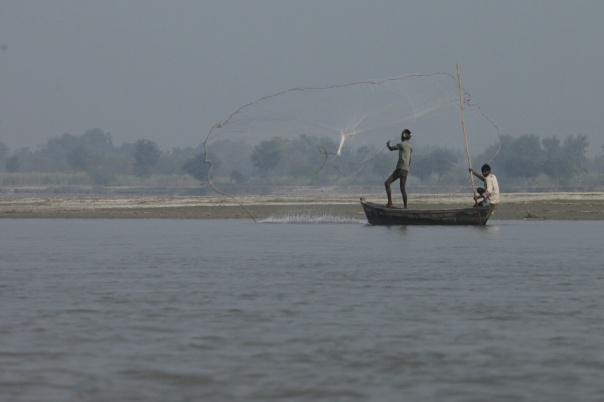
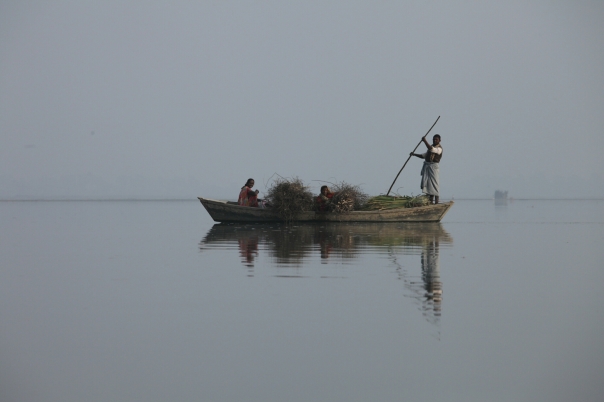
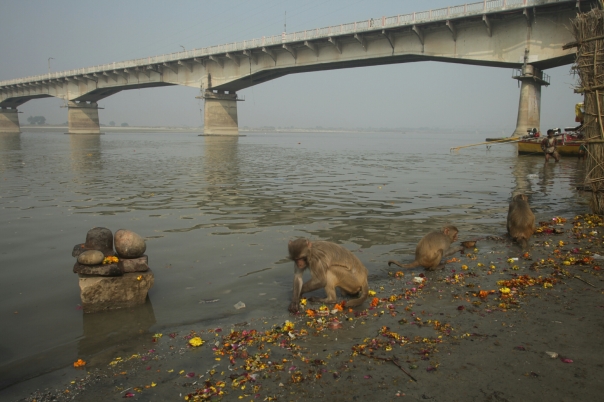
I share with you four marvellous environmental photo-essays. The first is my co-author Ashish Kothari's work on Ladakh. 


http://www.frontline.in/environment/despair-and-hope-on-the-roof-of-the-world/article7550148.ece

The second is a moving portrait of the fauna of Kanha National Park. 


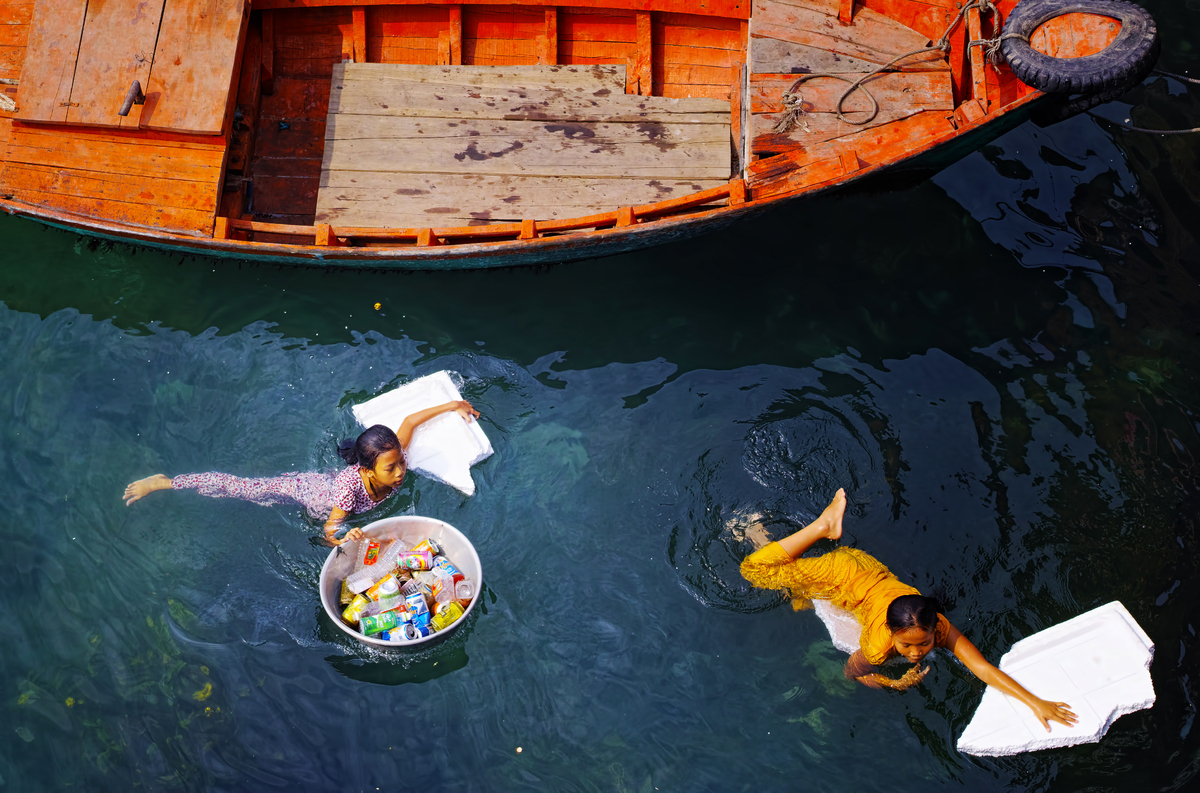
The third is actually a set of 30 best images for the 'Environmental Photographer of the Year'. 


http://www.huffingtonpost.co.uk/2015/06/27/environmental-photographer_n_7677434.html

And the last is a shocking set of aerial images showing the industrial devastation of the earth from the air.


Saturday, 8 August 2015

Salman ko Salaam !


“Kyonki tu Dhad-kan…main dil!”

When Munni and Pawan made me weep


Today is August 9, 2015. Exactly seven decades have passed since Washington committed perhaps the greatest war crime in the history of man by testing a plutonium bomb on the Japanese city of Nagasaki, close on the heels (just three days) after testing a uranium weapon on Hiroshima’s innocents. I say “testing” because such weapons were new to our species and it was yet to be known precisely what their destructive potential was. These two tests in real time helped zero in on the right numbers (for that time. The remarkable thing is that we still do not know exactly how many - obviously non-White - innocents were butchered in this dual savagery. Estimates vary between 130,000 and 250,000). 

Equally importantly, “Little Boy” and “Fat Man”, as the twin bombs affectionately came to be referred to by the Allied military establishment, also enabled the Untidy State of America to supersede the rising Soviet Union and define the contours of the remainder of the century (by controlling the terms of the Cold War and its hundreds of hot proxies in the “Third” World), if not also the distant outlines of the century we now live in. 

I remember that many years ago, after India and Pakistan had conducted their nuclear tests, some words of war criminal Henry Kissinger had leaked in the media and he was caught saying that the only two countries on earth which are “nuclear neighbours” are India and Pakistan and they offer the (obviously for Kissinger, salacious) possibility of what an actual nuclear “exchange” between such powers would look like in reality (as opposed to the war-games which provide only conjectural data to military planners and strategists).  

Warmongers and leaders on both sides of this foolish, metallic, electrically charged border have done everything possible in the last 17 years to bring everyone living in this part of the world rapidly closer to the day of nuclear reckoning. I remember a cartoon from around 1998 in which India and Pakistan go to (yet another) war. Islamabad launches a nuclear-tipped missile at New Delhi. It falls short and lands in Lahore itself, decimating the ‘city with a soul’ instantaneously. New Delhi retaliates by taking aim at Islamabad but instead finds Amritsar’s Golden Temple in the way. In their enthusiastic ghost sonata, in the spirit of Stanley Kubrick’s brilliantly funny Dr. Strangelove, leaders on both sides declare victory!


“Jai Bajrang Bali ki!”

It is with this background, supplemented by the latest refinements of absurdity on both sides of the border, that the film Bajrangi Bhaijaan is to be viewed.


I had refused all these years, on principle, to watch a Salman Khan film. Not only has he made a hobby of taking the law into his own hands, what an example he has set for boys and young men across the kasbas and metros of this land! With each sock on the jaw of a ‘bad’ guy, he not only shows the way to ‘handy’, ham-fisted, readymade justice, he also appears to be saying to his hundreds of millions of fans around the world “it is alright never to grow up. Life in the American global age is an endless adolescence - especially if you are a boy - and not only is it ok to indulge it, it is something to be celebrated with an impatient, agile fist!”

How could anyone outside an asylum for the delinquents put up with this hormonal nonsense?

Yet, yesterday I broke an important personal code and went to watch Bajrangi Bhaijaan at the strong recommendation of an old and trusted friend. Serendipitously, I found that while I was watching the film in Delhi, my parents too were in a Gurgaon multiplex watching the same film! Certain things are meant to be and sometimes our conscious minds must retire from their supervisory duties. So I left my thought-policeman at home and went to the Vasant Kunj Mall to give Salman a first - and last! - chance.

I was not disappointed. 

It is worth starting with the film's denouement  The last scene of the film is shot in the snows of Kashmir. A huge crowd of common Pakistanis defy military orders and knock down the high-tension wall separating the Partition Twins in order to let their new-found hero Bajrangi Bhaijaan return to India and reunite with his loved ones after having accomplished his Mission Impossible. He has just succeeded in reuniting, in turn, a sweet little girl (who lost her speech after an accident in childhood and who had lost her way in India after being separated from her mother), with her family in Pakistani Kashmir. All of this is achieved without visas and passports - just with lots of help from Pakistani friends who work for a media lovingly curious about India, and who ride colourful buses and are willing to lie in unison to the authorities if necessary - in order to enable safe passage for their ‘trespassing’ Indian visitor on a noble mission.

A simpler denunciation of the modern system of nation-states, a cowardly, cruel import in the first place from the God-forsaken (hypocritically “secular”) Western world, is difficult to imagine. Its deep-seated indifference to human well-being and its routine cruelties on all sides are in evidence throughout the movie. Love for one’s country is a wonderful thing, the movie seems to agree with Albert Einstein, but must it stop at the border? And why must love have to stand in queues for passports and visas? Shaahon ke darbar mein kahin ishq jhooka hai, I can hear Geeta Dutt sing behind me. In a memorable scene, poor Bajrangi goes with little Munni to the Pakistan High Commission in Delhi to look for a visa - without a passport in hand! Not only is he summarily dismissed, he is witness to a riot organised by a Hindutva mob trying, in the language they know best, to get back to India a certain ‘Karamjeet Singh’, held by Pakistani authorities. Bajrangi has to defend himself and Munni against them with the help of a bamboo bayonet which has “POLICE” emblazoned on it!

The film does not spare the religionists who are always in search of the political capital that God can help them accumulate and disburse. Salman’s character, Pawan Kumar Chaturvedi, is a bumbling dropout from Pratapgarh (UP) who clears Class X exams at age 30, on the 10th attempt, giving his father a fatal heart attack in the process! He becomes a Hanuman-bhakt after failing at the local sport of public choice, wrestling. Masculine bravado is mocked when it turns out that Pawan gets tickled when he is tackled! No one ever performed a better judo on the RSS - one of whose shakhas is seen fleetingly in one scene. 

Love conquers even ardent vegetarianism when we find Bajrangi Pawan Kumar Chaturvedi arranging a feast of chicken for little Munni when he realizes that she is “Mohammedan” and finds her secretly enjoying a meal in a Muslim household in Jama Masjid.

Pawan’s slogans throughout are “Jai Shri Ram!” and “Jai Bajrang Bali ki!” They could not cut closer to the jaw-bone. His faith is so redoubtable that even in Pakistan he looks for Hanuman-Bhakts!

During the last sequence, shot at the snowed-in border in Kashmir, when the emotional melody Tu jo mila returns as a reprise, I found myself singing along “kyonki tu dhad-kan main dil!” When Munni became Shaheda again and her speech returned as she bid goodbye to her beloved Pawan, I realised I was in a pool of prideful tears, immensely grateful to be born to the part of the world I have been born to! For I can see no such movie even being conceived by Hollywood in which - for instance, the Americans and the Russians could unite as a people, bypassing and rejecting their governments altogether. Unimaginable! For such social and cultural genius, no less for the faith that hundreds of millions carry in their peaceful, and ultimately friendly hearts, our Sub-Continent is utterly unique. Forrest Gump Bajrangi learns to acknowledge and say “Allah haafiz!” in Pakistan, much as some of his Pakistani friends learn to follow and say “Jai Bajrang Bali ki!” 

God is one. His forms are countless many. This is the message. It is this Great truth that will bring our people together again one day.

We have already seen the first real consequence of this landmark film. Geeta is a young “Indian” woman of 22, who is unable to speak. She lost her way to “Pakistan” many years ago. She was found by someone who took her to the famous Edhi Home in Karachi. Despite repeated attempts by people, Indian authorities took no notice of her, let alone help her return home. Now, after Bajrangi Bhaijaan, Foreign Minister Sushma Swaraj asked her ambassador in Islamabad to visit Geeta and help bring her back. Is there another part of the world where popular art has more real consequences?!

Judging from the popular reception of the film in both India and Pakistan (it has broken all box-collection records in both countries), Bajrangi Bhaijaan has achieved at a stroke what a thousand State-level dialogues and a hundred erudite tomes on war and peace in the Sub-Continent could not: It has cleared the room for a new, intelligent imagination of love, faith and faithful coexistence in this turbulent part of the earth. The beauty of Kashmir and Thar are invoked to metaphorize what is at stake in the cowardly shenanigans of leaders, armed forces, warlords and terrorists, or for that matter, in the shouting matches of warmongers on television or the laboured analyses of many intellectuals. While we certainly need good, incisive and accurate analysis, what we need even more is the public imagination to build happy, creative, peaceful narratives of faithful coexistence in the face of machine-guns, armoured vehicles, electric fences, high-security prisons, irresponsible governments and media, intelligence agencies, armed forces and terrorists virtually hell-bent on pre-empting and sabotaging any such collective initiative.

In this enterprise Bajrangi Bhaijaan succeeds beautifully at a popular level. The entertainment from one end of the film to the other is non-stop! Perhaps Salman’s existential predicament - born to a gifted Muslim Bollywood writer (no less than the co-scriptwriter of the game-setting Sholay) and a Marathi mother, making him the very embodiment of an Indian in so many ways! - helped him conceive the idea of a funny film on such a serious theme.

Now Salman has set a higher bar for himself than he, perhaps, ever has. He has a lot to live up to now!


For you, Salman..

Hum ko nahi maloom Salman ki tum doshi ho athva nahi. Ki ghalati tumhaari thhi ya phir kisi aur ki, ki tumne hiran ki hatya ki athva nahi. Insaan hoon, vakeel ya antar-yaami nahi. Nyaya aur kaanoon ki cheezein main nahi samajhta. Lekin itna jaanta hoon ki Khuda ya toh nyaya-poorna ho sakta hai ya phir karunawaan. Uska dono hona asambhav hai. Aur nyaya aur karuna ke beech agar hum se kisi ne bola choon-ne ko, toh is mein koi shaq nahi ki mera rujhaan kis taraf hoga.

Sau khoon maaf karne ke liye toh gantantra ke buzdil leaderaan ya phir sadiyon mein ek baar aane waale Gautam Buddha ya Mahatma Gandhi ki zaroorat padti hai. Anguli-maal sabse sahan nahi ho paata. Lekin ek-do khoon maaf karne laayak toh hum mein se bahut saare hain. Un mein se bahut se log sarkaarein chalaana jaante hain, sarkaaron ka samarthan aur unki sahaayta toh karte hi hain. Aur aaj-kal toh ek mahaan desh-vyaapi-vyaapam chhida hua hai. Toh phir hum tumhaare gunaahon (ya tathaakathit gunaahon) ko kis nazar se dekhein? Agar tum qabool kar lo apni ghalati, to phir tumhe kyon na maafi mile?

Bajrangi Bhaijaan ke baad hamaari taraf se ab sab kuchh maaf hai Salman…magar tumhe ab line pe bane rehna hoga. Samay bahut jatil hai, aur bahut kam bhi. Kahin Shiv Ji ka balance khatam na ho jaaye! Agar tumhaare jaison aur tumhaare mureedon ke jaison ne aadatein nahi badlin, aur samaaj mein bhog, upbhog aur himsa badhti gayin, toh ab catastrophe ‘testostrophe’ ke roop mein aayegi. Climate change raftaar pakdega, aur prithvi se uthega taandav ka vyakul swar: bhoo-kump, baadh, aur samudri toofaanon ke maadhyam se dharti maata hum sab ko - haan, tumhaari pyaari Munni/Shaheda aur Rasika ko bhi - apne lapete mein le legi! Hindustan-Pakistan ka naam-o-nishaan nahi bachega jab Himalaya koyle ki maha-jalan aur tel ki maha-khapat se gal ke hamaare upar haabi ho jaayega…Bajrangi Bhaijaan ke zariye tumne ye dikha diya Salman, ki “Pakistan Zindabaad!” aur “Bharat Mata ki Jai!” jaise naaron ke liye ap prithvi par bilkul bhi wakht nahi. Devi-Devata ab be-chayn ho rahe hain…

Hum sab ko ek swar mein aawaaz deni hai: Jai Bajrang Bali ki!Dharti maata ki Jai! 

Tumhaara gaanaa amar rahe!:

https://www.youtube.com/watch?v=WL8KbSR4Pno


Friday, 15 May 2015

Kumaon Katha

I have a long and close association with Kumaon. I first visited this part of the Himalayas when I was a schoolboy at St.Michael’s, Patna. We came to Corbett National Park on a scout camp in 1975. The romance of Jim Corbett’s life was fresh in my mind, having just read The Man-Eaters of Kumaon. This was boyhood, and life before the wild-life laws came into effect was uncomplicated. So I would often accompany my Uncle on his shikaar trips to the jungles of Rohtas on the Western edge of the Chhotanagpur plateau in Bihar, occasionally toying around with his rifles or pistols to shoot down a quail or a partridge (one reason these birds have virtually vanished from that part of India). I can still recall the occasions when one would hear the roar of the tiger from the machaan in the dead of night, waiting expectantly for him/her to approach the kill. 

Standing out in the memory of that 1975 trip to Corbett are the swim in the choppy Ramganga (there were crocodiles we were told!) and the time we found the tiger’s pug-marks very close to our tents. I visited Corbett again with my parents and my brother in 1979. On that occasion we were chased by a herd of elephants (could they run!) who did not much like the sound of the jeeps so close to some of the younger members of the herd. I also remember that trip for the occasions when we went rowing in the lake in Nainital and the magnificent view of the snows of Trishul, Nandaghunti (and was it Neelkanth?) from Ranikhet.

Later in 1979 I took a challenging hike with some classmates from school up to Rupkund Lake at 15,000 feet, right below the Nandaghunti-Trishul peaks. I repeated the trek with other friends a few years later, when I was in college, and almost lost my life when I was thrown off a windy ridge on the last leg of the climb, amidst a blinding blizzard. I was bringing up the rear, and lost control in the gust at some point, very close to dusk. I must have fallen at least a few hundred feet, the rucksack still miraculously hitched to me. It was the soft, fresh snow that saved my life. I was so grateful to Providence when I realised that I survived with all my bones intact. It took me two hours to make my way up the slope again. It had become pitch dark by then. I made contact with my friends after a while, and there was much relief. That was 1981.

In 1994-95, I spent many months in Kumaon, researching the forests of the region for my doctoral thesis. I studied the institutional changes in forest management since 1815, when the British seized control of the region, bringing the story right up to contemporary times. There was much to learn, not merely from the archives in London, Delhi, Lucknow, Dehra Dun and Nainital, but also from conversations with conservation stalwarts like Chandi Prasad Bhatt, Ramesh Pahadi, Ravi Chopra and Shekhar Pathak.

It was in February 2007 that I finally had a chance to visit my friends Theo and Malika, who have made Munsiyari their home since 1992. I loved the place. Its beauty and simplicity was most appealing. So, when I got an opportunity to come here again this year, I seized it with both hands.


Munsiyari ki Maati 

I am far from Delhi, in the village of Sarmoli near Munsiyari, not more than 10 miles as the crow flies from the awe-inspiring high snows of the Panch-Chuli range in the Kumaon Himalayas of Uttarakhand. Neither Tibet, nor earthquake-ravaged Nepal are too far from here. 

I write before the grandeur of the five Panch-Chuli peaks (some almost 7000 metres in height), arrayed high against the bright blue sky. The Gori Ganga flows east towards the plains in the valley thousands of feet below. The town of Munsiyari is on the north-facing slope of the range which adjoins the one on which Malika and Theo have their home. I have been staying with them for a week. Here is a stunning image of the Panch-Chuli range at sunset (taken by Ram, who lives and works with Malika and Theo...no cheap photoshopping here!):


My co-author Ashish Kothari and I came here for the bird festival, Kalasutra, which just got over. Ashish has left, I have stayed on a few more days so as to meet Theo, who returned from a trek to Garhwal last evening, and to attend the big Mela that is scheduled for the 17th, all this a tribute to the organisational energy of Malika ('General Saab' as I like to call her, as opposed to Theo, who is just 'Saab') and her team of extraordinary workers at Himal Prakriti (http://www.himalprakriti.org) and Maati (http://www.sruti.org.in/?q=sangathan/maati-sangathan). They have been doing some outstanding work involving conservation, watershed restoration, livelihood generation (often through tourism), craft-revival and community-building over two decades. Malika was also elected as Sarpanch of the Van Panchayat of Sarmoli in 2003, though she has not held the post in the last few years. 

The women of Maati have also been running a wonderfully popular homestay arrangement for many years. You can find details here: 


There are many other friends visiting here from various parts of the country, from as far away as Bengal, Bangalore and Kerala. Each is here to learn from and contribute to the creative community experiment that Sarmoli is becoming. 

At the heart of the action is little Sarayu, 4 years old, daughter of Sandy and Shruti, who are visiting from The Centre of Learning in Bangalore. She speaks with the authority of a grandmother, careful to lean on each syllable as she goes about constructing complicated sentences, ever keen to try the varieties of local food - from Sampa Sattu to Ragi bread to Kadhi-Tehri - that one or another person keeps churning out of the busy kitchen here. We take turns to cook, though Malika, Ram (Malika's right-hand man for the past two decades) and Shruti end up doing the bulk of the work. Sandy is helping local workers build the stone-embankment next to the homestead. The elderly Nainda (from a village nearby called Jainti) sits on the terrace doing a form of basket-weaving unique to this area, another craft which few young people are keen to learn in these parts. The Maati women are also here to do their weaving and embroidery work. 

Theo and Malika’s son, Zanskar lives here too. He is a skilled outdoor guide, after spending two years getting trained in New Zealand. Zanskar is a science fiction aficionado and may well turn out a novel sooner than later! The two dogs, Laddoo and Apalam - both beautiful, tough Tibetan Mastiffs, and the cat, the pregnant Tokey, complete the cast, not to forget the four cows, lots of hen and two geese as well.


Kala Sutra

Over the past week we have done several hours of bird-watching every day, the veteran bird-watchers Ashish and Ram taking us and many young people through the ropes of the subtle art. They are so much more swift than us that it takes great silence and patience to observe birds. Treading lightly, keeping all five senses fully alert, is the key. After the dawn chorus, for which I have been awake every morning, there is a brief lull before the day's activities commence. We are taught to listen so carefully to each bird-call that they all get etched in the ear's audio library. There are insistent cries, like that of the Nightjar, or of the Tits and the Sunbirds. There are plaintive calls, like that of some of the Cuckoos. There are melodious calls, like those of the Robins and the Sibias. The Rufous Sibia's is virtually the signature tune of the Munsiyari range. They are everywhere and they sound even more melodious than this:


This is an image of the Greentailed Sunbird, one of hundreds of marvellous pictures that Ashish took over the last several days:


There is such a vast variety of colourful birds that it staggers the visual imagination. There are Babblers, Warblers, Fly-catchers, Thrushes, Woodpeckers, Hoopoes, Orioles (including a magnificent maroon one), Jays, Finches, Magpies (the Yellow-Billed Blue Magpie particularly spectacular with its long, forked tail), Partridges, Pheasants, Drongos, Swallows, Swifts, and quite a range of Raptors - the Himalayan Griffon Vulture and the Serpent and Black-Forest Eagle being most imposing in flight. Here is a flying image of the Besra, a predatory sparrow hawk recently observed in the area:


Till this visit, I did not know that small birds can often attack bigger ones, especially if their nests or young ones are troubled by the predators. The Drongo is particularly aggressive when it comes to such things. Here is an image of the Eurasian Jay attacking a raptor no less than the Crested Serpent Eagle:


India has among the largest number of bird species in the world, up to 1300 according to surveys in recent years, at least 300 more than the United States (numbers change according to season, year and duration of surveys). Thanks to its enormous ecological diversity, India has easily the widest variety of birds in the world too. There are desert-birds, Himalayan birds, birds that breed in wetlands, birds that thrive in rainforests, on grasslands, cultivated fields, and human settlements. However, what is striking is that a quarter of all birds found in India live in a mere 0.7% of its geographical area, making such regions as the Himalayas especially critical from the perspective of conservation. Of the 1300 bird species to be found in India, some 690 are to be found in the state of Uttarakhand alone (some of these are also found elsewhere). Of these, as many as 326 are found in Munsiyari! 

So Munsiyari is an area of intense interest for anyone interested in birds and their enormous significance for the health of ecosystems. A researcher from Princeton was here recently, exploring the possibility that the changing nesting habitats of birds (moving to higher altitudes, for instance) may be prompted by climate change. It may be relevant to remember here that one important reason many jungle cats may have turned into Jim Corbett's famous "man-eaters of Kumaon" a hundred years ago has to do with the fact that they moved up mountain slopes in search of food (after game had begun to vanish in the terai areas, following intense deforestation for commercial purposes) and found mostly humans for food at higher altitudes!

During the bird-festival, scores of school-children were here and they were taken around by local guides, trained by Ram and Theo, on bird-walks. In addition, there were many other events and games organised for them, Zanskar handling the obstacle games and a variety of jungle rope-tricks.


Here is a report in Hindustan Times on the bird festival:


Nadi Sutra

In 1997, Malika did a remarkable 210-day Himalayan traverse, walking with a team of nine women led by Bachendri Pal from Bomdila in Arunchal Pradesh to the Karakoram Pass in Kashmir.

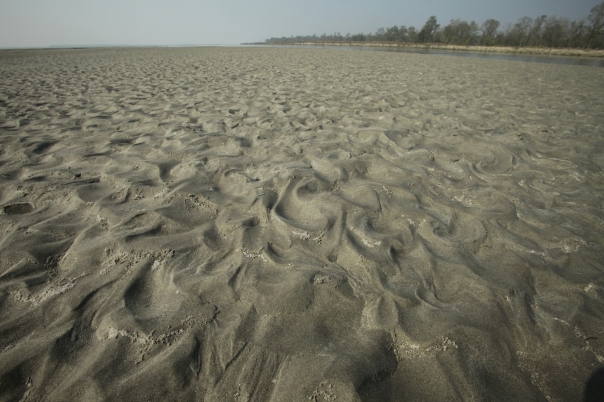
Almost two decades later, Malika’s husband and son took up the challenge of rowing down the Northern flank of the Ganga watershed as it emerges from the Himalayas in Eastern Uttarakhand. Theo and Zanskar rowed almost 2000 kilometres, for 75 days, from November 2014 to February 2015, along the Mahakali-Karnali-Ghaghra-Sarju-Ganga continuum, terminating their exploratory expedition in the delta of the Ganga in the Sundarbans. Malika joined them in the last leg of their voyage.

Do have a look at some images from their blog:
image

image

image

image

Much sanctimonious lip-service is paid by Indian governments, especially the one in office right now, to the rapidly deteriorating condition of the Ganga. Theo and Zanskar’s blog of their voyage is worth reading for anyone genuinely concerned about the state of not only the Ganga under the assault of so-called ‘development’, but indeed any major river, whose waters are being targeted for re-engineering into a destructively ambitious, man-made system of nationally interlinked waterways. It is time for metropolitan India to wake up to the enormous perils that lie in wait if ecological rashness continues to prevail among its policy elites:
https://nadisutra.wordpress.com/page/4/


Mesar Kautik (Mela)

Two beautiful village girls once went bathing in a mountain lake hidden by forests. One of them fell in love with a man who she met there and who took her up the mountain. The pandit at the temple spilled the beans to the villagers, who came up the slope looking for the missing girl. When they confronted the man who had taken the girl, wanting her back, the man told them that they could have her body back, though her spirit would remain with him. The villagers consented and had to face the dead body of the girl, who had been killed by the man. He appeared to them in the form of a wrathful god who cursed the village community that no more than one child would be born to each family. From that day onwards the villagers began offering a sacrificial goat at the mountain lake in order to appease the god. They began to commemorate the occasion    with a mela.

The lake is Mesar Kund, a few kilometres up the slope from where Malika, Theo, Zanskar and Ram live. They have helped the village community in restoring it. The village is Sarmoli and the community call themselves the Barpatiya. The mela to mark the occasion is called Mesar Kautik.

It happens tomorrow.


Thursday, 7 May 2015

'Butterflies on the Roof of the World': Remembering Rabindranath on his birth anniversary in the Himalayas

"That I exist is a perpetual surprise which is life", Rabindranath writes in "Stray Birds", his lovely little square pocket-book of aphorisms that reveal the genius of his heart. Had Gurudev gone on living, he would have turned 154 today!

As it turns out, I am in Bhimtal, in Kumaon, not far from Ramgarh, where Rabindranath spent many creative weeks of his life, and where I will be staying for a few weeks with my parents later this month. 

I met a man today who  has one of the largest collections of butterflies in the country. His name is Peter Smetacek. His father Fredy Smetacek Sr., a Central European migrant from Silesia, was the original collector, Peter having followed in his father's footsteps. He gave me a breathtaking tour of the butterfly museum adjoining his hillside home (http://www.himalayanhoneymoons.com/honeymoon-destinations/kumaon/lake-district/bhimtal/butterfly-research-centre).

Peter has taken the frontiers of knowledge of butterflies in this country to new horizons. He has recorded his family memories as well as his observations of butterflies in his recent book which I borrowed from my host family (Peter's neighbour and sister-in-law, Padmini Smetacek's family) bookshelf and saw today, Butterflies on the Roof of the World (Aleph, New Delhi, 2012). 

The book has a wealth of insight not only into the world of butterflies but also what the disappearance of certain insects and moths means for the ecologies of which they are an ineluctable part. In his book, as well as in this TEDx talk (http://www.himalayanhoneymoons.com/honeymoon-destinations/kumaon/lake-district/bhimtal/butterfly-research-centre), Peter has some very important insights into the surprising connections between the health of butterflies, the condition and kind of forests, the grazing pressure on the forests, the condition of streams, aquifers and other water systems. The presence or absence of butterflies is also seen by him as a "bio-indicator" of climate change.

I am still to acquire a copy of the book and read the whole of it, something I am very much looking forward to.

Sitting in Padmini's verandah, I did read the last few pages of the book this morning, where Peter makes a persuasive case for what ails the ecologies of the Sub-Continent and endangers water security for its multiple populations: an excess of cattle-grazing, related to other ecological imbalances stemming from growth. 

Coincidentally (or perhaps not?), my eyes fell too on the last line of the book, where Peter ends with an optimistic scenario of how water security will be ensured in the future: "Into this entirely feasible vision, Oh Lord, let my country awake."

Readers of Rabindranath will recognise the trace of his heart in these words. A happening appropriate for May 7!