Friday, 28 August 2015

Four Environmental Photo-Essays

I share with you four marvellous environmental photo-essays. The first is my co-author Ashish Kothari's work on Ladakh. 


http://www.frontline.in/environment/despair-and-hope-on-the-roof-of-the-world/article7550148.ece

The second is a moving portrait of the fauna of Kanha National Park. 


The third is actually a set of 30 best images for the 'Environmental Photographer of the Year'. 


http://www.huffingtonpost.co.uk/2015/06/27/environmental-photographer_n_7677434.html

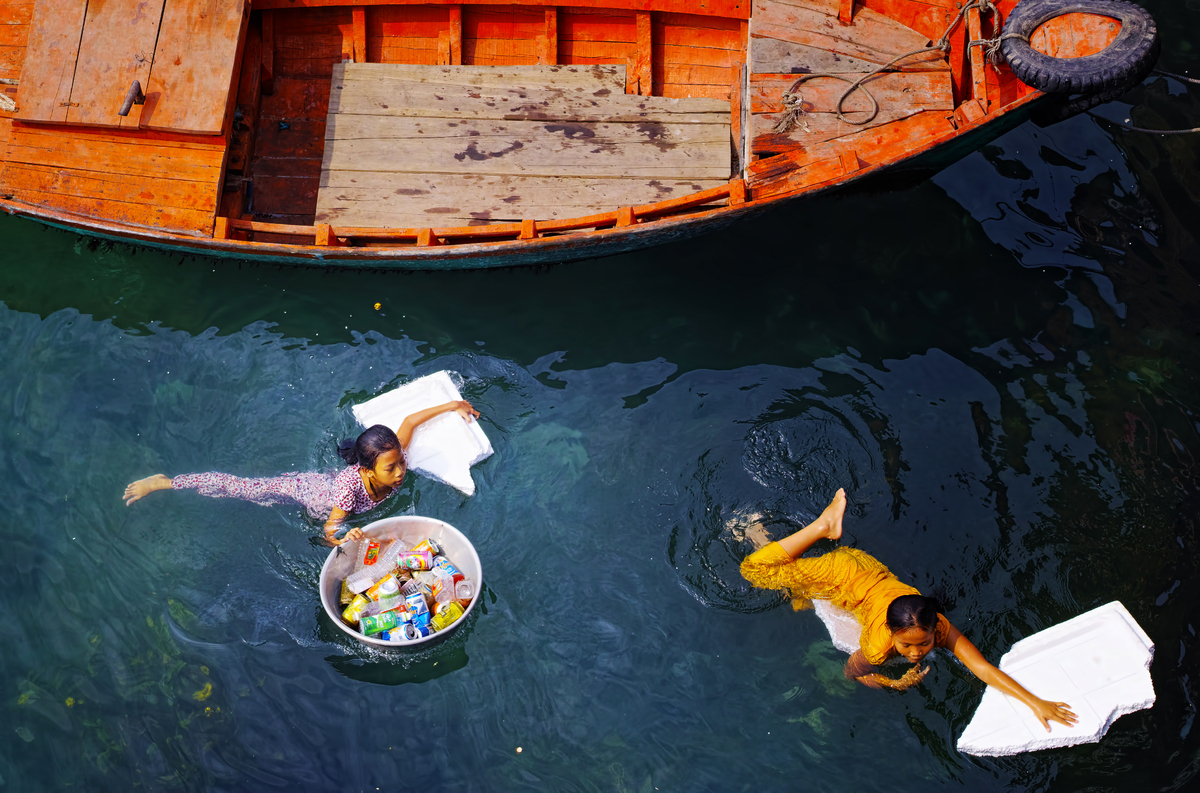
And the last is a shocking set of aerial images showing the industrial devastation of the earth from the air.


Sunday, 16 August 2015

How to render democracy harmless

How to render democracy harmless

Let public and private merge for effective stategraft


“Many of India's billionaires have made money by their proximity to govt.”
- Raghuram Rajan, Governor, RBI. He was Chief Economist of IMF in July 2010, when he made the remark in an interview to ToI.  


Raghuram Rajan spoke, in the same interview, of the “privatization, by stealth, of the State in India.” Privatization is the ruling mantra of the age of corporate totalitarianism that was inaugurated by American and global business elites with the uninhibited backing of powerful governments the world over after the Berlin Wall came down in 1989. This takes a hundred forms - from the poaching of lucrative public assets by wealthy corporations when governments are fiscally stretched (often) to the ever growing frequency of use of the “revolving door”, whereby nobody finds conflict of interest objectionable as the public officials of last week become corporate bosses this week, or vice versa, a practice well-learned in this country from our imperial masters two oceans away.

A blatant instance of the phenomenon is illustrated by this image from 8 years ago. It shows Ratan Tata flying a US fighter jet at an air show in Bangalore in 2007:


I wrote about this image 8 years back. The best I can do here is to simply quote what I wrote then:

"Picture this. At an air-show in Los Angeles one of the biggest arms manufacturers in the world, British Aerospace, invites Mr. Bill Gates of Microsoft to have a go at flying one of the latest models of their Hawk fighter aircraft. Would the American media respond by flashing front-page images of a beaming Bill Gates waving to supporters as he was entering the cockpit of the Hawk, following them up with adulatory reports describing the elevated feelings felt by the unexpected new pilot as he conquered the sound barrier? Or would the event not generate a national scandal that a private businessman accepted the invitation to fly a military aircraft, which ordinarily can only be tested by pilots on public duty?

"More than likely the latter possibility would transpire. However, what happened in Bangalore last month was another story, as the Indian national media fell to new depths of celebrity “journalism”…

“…A private fantasy was gratified. Mr. Tata’s dream of flying a fighter jet came true.”

If you have 10 minutes, it may be worthwhile going through the 2000-word piece I wrote then:

https://zcomm.org/znetarticle/as-india-goes-global-the-public-goes-private-by-aseem-shrivastava/

or

http://www.countercurrents.org/shrivastava300307.htm  


If you wish to grasp the depth of our national illusions and ambitions today, please take a while to watch this video in full, which NDTV chose to show as one of its “Classics” in its silver jubilee year, 2014: 


The video not only shows  Ratan Tata in a jacket with the US flag emblazoned on its upper arm, it also shows him performing flying stunts at the Bangalore Air Show in 2007. For good measure, NDTV’s Vishnu Shome is also shown a good time by the US defence contractor firm, Lockheed Martin, eager to grow the potentially vast Indian market. He learns from the American test pilot that the aircraft he is flying has just arrived from combat duties in Iraq. He returns from the fighter jet ride with (in his own words) “a silly smile on his face.” Finally, much closer to reality, the video shows two accidents, one of a helicopter, the other of an aircraft, both manufactured by Hindustan Aeronautics Limited, at the same air show. One of the pilots was killed during the show.


Public-private-partnerships under Indian corporate nationalism

What is going on here? Neither Ratan Tata nor Vishnu Shome nor any of the scores of media cameramen at the air show show any sign that they understand a distinction vital to the health of a democracy, or even a republic. The time-honoured distinction between the public and the private realm, so sacred to the making and maintenance of democracies across the world for many a century (and perhaps even more to the making of republics since the days of Greece and Rome), has blurred into invisibility. How can the promise of “transparency” or “accountability”, two of the abiding demands made on contemporary democracies, ever be fulfilled if private tyranny dovetails into State power so seamlessly? (I deal with the issue at greater length in the 2007 piece I wrote: 
https://zcomm.org/znetarticle/as-india-goes-global-the-public-goes-private-by-aseem-shrivastava/ or
http://www.countercurrents.org/shrivastava300307.htm ) 


The problem is far more widespread and deep-seated than is commonly understood in public life in India. In this century, the “cloud elites” of global finance and the extractive elites in league with mining mafias have taken control of the State in more countries than one can think of. The Untidy State of America has pioneered the trail and conflict of interest has ceased to matter even in the high offices of the Western world, as the bailouts after the Great Crash of 2008 showed. Countries like India have followed the West blindly without pausing to ponder the consequences of such a collapse of the public into the private. 

Additionally, India has a further legacy issue to live with. In general, the Indian State is a soft version of its Western counterparts. The centre of gravity of Western societies is squarely within the domain of the State. If the State collapses, society gets wiped out in a matter of days. Such has never been the case in India, and is not the case even today. Mrs. Thatcher, who believed that “there is no such thing as society”, could not have won even a panchayat election in India with such a nihilist slogan, whose vacuousness would be transparent even to those below the age of voting in India.

Communitarian identity, involving the biradiri (which could be seen variously as caste, region, language or religion, depending on time and place), is central to Indian social and political life to this day. Elections at all levels are conducted under this basic parameter. One reason for the corruption in offices high and low is that everyone’s first loyalty is to their communities and not to the ‘public’ that office-holders in government claim to represent, no matter that oaths are taken when they are inaugurated. Politicians of divergent ideologies are quite unashamed to sponge off public offices for the good of their communities, as they see them, the tax-payer be damned. In many cases, as we have seen in places as different as Bihar or Haryana, politicians are unafraid to admit this before the camera. 

These conditions in India are really a world apart from the situation in Western countries, where individual citizenship came of age many decades ago, and communities of the sort we are talking about eroded (for better and for worse) even farther back in history. 

So, in addition to the trend towards the privatisation of large areas of State activity going on in the West since the days of Thatcher and Reagan (the Second Gulf War saw the powerful re-emergence of private mercenary security companies and fighting units, essentially outsourcing and privatising warfare itself), the Indian polity has the additional issue of a long-standing conflation between the public and the private sphere of existence. In this,  Ratan Tata is closer in mentality to the rickshaw-wallah who spits on the street, than to Bill Gates. In India, unlike in the West of yester-years  public space is not sacrosanct. 

It is this colossally profound conflation and confusion between the private and the public realms that accounts for a thousand failures of Indian public life today. To list just a few here: the coal and spectrum scams of recent years, the way “public-private-partnerships” have created new avenues of graft, the manner in which SEZs were created by UPA-I to exempt corporate economic activity from the Indian Constitution, the manner in which governments have been acting as land brokers for private firms (ab)using the “public interest” clause in the Land Acquisition Act, the casualness with which companies are tasked with ‘self-monitoring’ in the critical areas of environmental regulation (like pollution of air or water) and labour standards. One could go on endlessly.

These are just a handful of the scams that have mushroomed in the last generation as a result of ever-growing intimacy between the State - which has mutated from being a ‘traffic-cop’ to being a ‘player’ in its own right - and India Inc. What we have today is what Ashish Kothari and I describe in our book Churning the Earth: The Making of Global India as an unabashed ‘corporate nationalism’, whose ideology of choice for masking its truth is ‘development’. Developmentality involves the “cultivated failures of cognition” we analyse in the Conclusion of our book as part and parcel of the systematic smoke and mirrors national self-deception needed to mask the enormity of the graft under way in this age of gluttonous power. ‘Development’ is by far our longest living national lie. It is our word for elite denial.

The consequences of the lack of understanding and acknowledgement of the roots of graft in Indian public life will continue to grow at alarming rates in years to come, as the ever-growing mafioso blood-trail in the recent Vyapam scam shows. The fact that social scientists show scant recognition of the location and depth of the ailment is only a sign that even the world of knowledge and the academy has been corrupted by the blinding global and national fog that has settled like a suffocating canopy over our times. 

At an event the other evening at the India International Centre, I brought up the point about Ratan Tata and the fighter jet before a large audience that had just heard a leading figure from the national commentariat trace India’s “aborted transitions” to successful modernity to the conflation of the public and the private realms. There was a hasty nod in response, but no attempt was made to see the invisible social thread that ties Ratan Tata and the rickshaw-wallah into the same spider’s web of living confusion.

This is not an India that anyone can be free, happy or safe in, no matter that ‘prosperity’ has mounted so visibly (and understandably!) in certain quarters. One can only expect rapidly growing business for security outfits and psychiatrists under the conditions of structural anxiety that have come to prevail. This is certainly not the India that the men and women who sacrificed so much so that we, their progeny, could be free, had dreamed of.

Yesterday, there was a mail from Flipkart in my inbox. It wished its customers “Appy Independence Day.” When happiness is no longer possible, or even believable in principle, the best item on the available menu is mobile ‘appiness’. Wah Bhai, India. Aaj Gandhiji zinda hote toh kitne prasann hote! 80 crore logon ke paas mobile phone ho gaye hain, desh duniya ke top investment destinations mein shaamil ho gaya hai, aur Amreeki gola-baarood banaane waali companies ko dher saaraa business de raha hai... 

Saturday, 15 August 2015

Independence and Partition - II: Kashmir ka Khat

I had to attend an ecology conference in Ladakh in July. My co-author Ashish Kothari, as well as the environmental group he helped to start, Kalpavriksh, was involved in organising it. It was part of a set of regular meetings that have been happening in different parts of the country that go under the name of Vikalp Sangam. The first one was held in October 2014 in Timbaktu, in Andhra. The second was in Madurai in February 2015. The third one was organised in Leh, Ladakh in July. The idea in these Sangams is to share experiences and exchange ideas on practically viable alternatives to the predatory development model that is ripping through the country's ecology and cultures like a remorseless, self-destructive juggernaut.

I arranged with some friends from Bangalore and Mumbai to meet in Srinagar and take the road route from there to Leh, a distance of 400-odd kilometres, via Zojila and Kargil, to be covered over two days. While I had traveled to Ladakh in 1986, I had flown, and so missed much of the stunning landscapes along the way. This time, armed with a brand new Sony camera gifted to me by my kind brother (the second camera he has gifted me over the years!), I was really excited about traveling to Leh by road.


I spent a day and a night beforehand, by myself, renting a room on a houseboat on Nigeen Lake. It was lovely. I heard from one of the boatmen the story of how the British gradually and subtly inserted themselves into Kashmir. It appears that in the 19th century, there was a British Resident stationed in the Maharaja's kingdom. They were forbidden from acquiring land in Kashmir. On one occasion a British merchant came upon a houseboat with a shop built atop it. He took a fancy to it and asked the owner if he could buy it from him for a price. The owner refused, but promised to build and sell him a new houseboat. This, legend goes, was the first piece of property the scheming Brits bought in Kashmir, without breaking their agreement with the Maharajah about acquiring land! Today a houseboat can cost up to Rs. 2-3 crores.


Enterprising young boys make humble livelihoods on Dal lake.


My friends from Bangalore and Mumbai arrived the next day. One of our colleagues was a friend of Jyoti Singh, daughter of Karan Singh, from the ex-Royalty of Kashmir. Jyoti so very kindly hosted us in her utterly beautiful and hospitable Almond Villa, at the base of Shankaracharya Hill, overlooking the famous Dal Lake. She embarrassed us with the sheer prodigality of her hospitality, serving some truly delectable food, other than the splendour of the rooms we stayed in.


We had a good look at the fabulous mosques of Srinagar one day, seeing some exquisite places.


We were to set off for Leh by jeeps on July 17. However, luck (or rather weather driven by climate change) was not on our side. Ladakh had unpredicted rains because of repeated cloudbursts and two attempts at approaching Zojila from Srinagar were thwarted by mudslides and flooding near Sonmarg. We were obviously disappointed.

On each occasion, we were violently stopped by heavy cordons of CRPF jawaans and J&K Police. They banged the vehicles with their batons and screamed at the drivers of the jeeps for daring to go towards Sonmarg. There were mostly young Kashmiri men among them. When we got off the vehicles to explain the purpose of our visit to Leh, they straightened up, especially when they realised that Jyoti Singh was traveling with us. They showed us pictures of the flooding ahead on the highway explaining, this time gently, why we could not go. The same armed men who were throwing their weight about a minute ago were behaving like obedient schoolboys. Their behaviour was schizophrenic. I was reminded of the TV advertising in Srinagar one evening when I saw ads of mental health counselling. There are many commercials like this. The other ad you see frequently is of cures for infertility among women. It appears the whole valley is sick from the ongoing conflict with Indian security forces. The place is the nearest thing to Palestine I have seen in my life. There are up to 800,000 armed men in uniform in the Kashmir Valley. Armoured vehicles with 'Sadbhavna' written in front of them have gunmen at the ready.


I had visited Kashmir in 1974, with my parents and my brother. I had just begun playing serious golf (briefly contemplated turning professional when I was about 18). I do not remember seeing a single army jawaan on that trip to Srinagar, Gulmarg and Pahalgam. This time, 41 years on, was different. Very different.


There is a construction boom across the Kashmir Valley, very reminiscent of what happens in Palestine. On the other hand the old homes and shops are crumbling. I was puzzled as to what is going on. How come so many new homes and mosques are coming up in such a context? Who is financing them? I was informed by more than one person that land and real estate markets have been very active across the Valley. People are selling off land, forest, and any other assets in order to raise capital to build fancy new homes. Banks are also giving attractively priced loans for home construction and ownership. A lot of mosque construction, it turns out, is being financed by money coming from the Middle East. The new mosques are being built on the Central Asian design, without the big bulbs and minarets familiar from the Sub-Continent.


Next to every mosque is the inevitable CRPF or BSF camp with security forces on the alert. Every few hundred yards on the road to Pahalgam are armed commandos and jawaans, ready to address any exigency that is never too far under the surface. Security arrangements were particularly tight (you had to go through security layers, almost as bad as at Srinagar airport) when we were in the Pahalgam area, since the annual Amarnath yatra was going on. In the Valley, there is hardly a home which has not lost a family member to death or disappearance. At the airport I saw a number of books documenting such tragedies.


This boy grinned from ear to ear when I teased him that he resembled Shahrukh Khan!


As the film Haider (which was shot partly in the basement of Jyoti's lovely house) tried to show, the one thing most palpable across the Valley is suspicion. You can virtually cut it with the proverbial knife. 


A man somewhat older than me I met in Pahalgam's Lavender Park asked me where I was from. I said "Hindustan", which has, revealingly, a better chance of inviting friendship than an answer like "Delhi". He said "Ab toh jenaab hamaara Hindustan se koi waasta nahi hai. Hindustan-Pakistan ab hamaare peechhe hain. Hame toh aage dekhna hai." When I asked him to elaborate, he said "aap ko Hindustan ki kaun si fauj Hindustan mein nahi mil rahi hai? BSF, CRPF, ITBP...yahaan aa jaiyye Kashmir ki ghaati mein, mil jaayegi. Aathon faujein yahaan maujood hain." 
    
Yet, daily life goes on amidst these stiff odds. Big billboards advertise higher education - such as medicine or engineering - in Bangladesh, not in India or Pakistan!


People speak openly against the Indian government, against all Indian political parties and the National Conference, and against Narendra Modi. Our driver Mehraaj Bhai told me that PDP would have won with a far handsomer margin had Mufti not allied with Modi's BJP. Srinagar's leading newspaper Kashmir Rising is openly critical of Indian policies in Kashmir.

We saw something surprising in Srinagar one day: a liquor store busily conducting its trade among the youth of the city, at the base of the Shankaracharya Hill. As soon as the Ramzan rozas finished there was quite a crowd at the liquor store, loud music blaring from cars on the boulevard by the Dal.


At the airport I saw a large number of new books documenting the atrocities and excesses of security forces in the Kashmir Valley. The alienation seems to have got so encrusted that things appear to have passed the point of no return. No maturity or sagacity has been shown by leaders. Gone are the days when one could expect an Indian Prime Minister to quote the great Kashmiri poet Mahjoor and say to militants "agar aap samvidhaan ke daayre mein nahi baat karma chaahte hain toh chaliye hum insaaniyat ke daayre mein baat kar lein." Vajpayee is still the most respected Indian leader in Kashmir.

The last picture I took in Kashmir was of our departure lounge at Srinagar airport. It resembles an army sports arena!


The picture tells us much about why the Kashmir Valley is in the shape it is in, why the BJP could not muster a single seat there. The picture also reveals the immense value of some of the peace and healing initiatives being undertaken in the Valley by citizens. Jyoti Singh organises every year in the last week of August the Annual Dara Shikoh Festival for the Arts, in which a range of Kashmiri artists get a chance to show and discuss their work. 


Jyoti's goal is to  address local youth and help revive faith in the great syncretic traditions of Kashmir, ways of community life and philosophical and religious thought and practice, not to forget poetry, that have sustained the people of this beautiful land over the centuries.

Kashmir refuses to be treated as a trifling yo-yo in the predatory politics between India and Pakistan. And in this defence of dignity lies its hope for the future.


Independence and Partition - I: Azaadi aur Garam Hawa

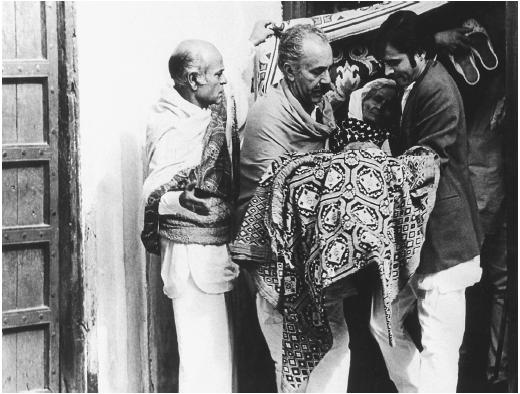
After watching Masaan for a second time last weekend, I realised, while discussing the film with a friend, that one of the big gaps in my cultural upbringing is the fact that I somehow missed seeing M.S.Sathyu's Garam Hawa, perhaps because I was too young when it was released (1974) and later, I was away from India for nearly two decades. A story in last weekend's edition of Hindustan Times informed me that the film was available on Youtube. So I promptly decided to to see it, and now realise why so many regard it to be one of the great films of Indian cinema.


Appropriately, I finished watching it yesterday, August 14, just in between the anniversary of Pakistan's and India's Independence Day celebrations (in fact, the two days are actually the same when you consult the Indian Independence Act of 1947: Karachi's The Dawn had a fine piece the other day on the theme: http://www.dawn.com/news/1199235)

The film is altogether too chilling, too real for our bubbled lives of 2015. It begins with a scene whereby Salim Mirza (the immortal Balraj Sahni) has just bid goodbye to his elder sister, who has caught the one-way train to Pakistan. On the way to his factory, he remarks to the taanga-waallah:

"कैसे हरे-भरे दरख़्त कट रहे हैं इस हवा में!" 

("Such leafy, green trees are being felled by this wind these days!")

And the taanga-waallah responds with workmanlike gusto:

"बड़ी गर्म हवा है मियाँ, बड़ी गर्म!" 

("It is a very hot wind, very hot!")

Every moment of the next two hours, the viewer is kept on the edge of the seat, as one tragic scene after another unfolds with premonitory perfection.

What a film! The movie breaks your heart​ again and again, and yet again​, but ends on a note of redemptive hope, howsoever meagre.​ It should be watched compulsorily, especially by our young people in schools and colleges: 

https://www.youtube.com/watch?v=QZTvF_1AN8A​


This 2014 interview ​that Teesta Setalvad (who says she has seen the film 27 or 28 times!) does with MS Sathyu and Shama Zaidi, ​the film-maker/scriptwriter​,​ on the making and re-release of Garam Hawa (as Garm Hava) is worth watching too: 

https://www.youtube.com/watch?v=bEGhKn4LhzA


The cruel absurdity of Partition was understood even by the man invited to draw the line between the two birth-marked Sub-Continental twins. Cyril Radcliffe "never forgave himself. He was summoned to Delhi in 1947 — he was neither an administrator nor a cartographer, but only a lawyer, who had never set foot in India before — with the specific assignment of partitioning Punjab and Bengal on religious lines. He arrived on July 8 that year, and having done his job, left India the very day it attained Independence, burning all his papers and without collecting his fee, 40,000 rupees — so appalled he was by the killings." Over a million people were killed and at least 12 million were rendered homeless to serve the political ambitions of our wicked leaders. Gandhiji was virtually alone in his mourning.

There are farmers, both on the Indo-Pak and on the Indo-Bangladesh borders, whose home falls in one country and their fields in another. There are neighbours' adjoining courtyards through which the Radcliffe Line runs!:

Before we are Hindus and Muslims, we are human beings, equal in the eyes of the one and only Creator. Not only was this borne out once when a Hindu bigot had to unknowingly accept a Muslim man's blood for his bleeding child in hospital, there is also evidence aplenty in our traditions of art, literature, and music. Yesterday's edition of The Hindu had a splendid piece which reports the influence that the great Ustad Amir Khan has had on a very large number of musicians in succeeding generations, including on the likes of Vidushi Kishori Amonkar, and Pandit Ulhas Kashalkar:

http://www.thehindu.com/features/friday-review/ustad-and-the-world-of-gharanas/article7535908.ece


If Indian and Pakistani leaders in 2015 have any courage left in their hearts whatsoever, they will never allow 1947 to repeat itself. Partition is the massive, unacknowledged gaping wound in our history. Even before it had begun to heal, more pogroms were launched, more wars fought. The pathology has only grown. The denial has become cancerous now. It shall prove truly fatal, unless the facts and passions are faced through mutual acknowledgement of very inconvenient truths. We urgently need memorials, museums, histories, films, literature, art, and, above all, a Truth and Reconciliation Commission, howsoever belated that may be. 

One reason to study and acknowledge history collectively, in the public sphere, is to prevent it from repeating itself farcically, once communities have grown accustomed to the gravity of the original tragedy and have all but forgotten its spiritual, emotional, and physical impact when the bloodstains had not dried up.


Thursday, 13 August 2015

Five reflections on Independence Day

For the next week or so, I will be posting a series of five short articles, each of which asks a specific question in relation to India's independence. In sum, the articles ask one fundamental question which constitutes the compass for all the others: Is India really free?

The five articles are titled:

1. How to make every Indian fly
2. How to render democracy harmless
3. How to destroy an ancient culture
4. How to outgrow agriculture
5. How to conquer nature

The first of these is posted here for your considered reading.


How to make every Indian fly

The imperatives and dilemmas of aspirational India


“Impoverished India can become free, but it will be hard for any India made rich through immorality to regain its freedom.” 


- Mahatma Gandhi, Hind Swaraj (1909)


Aspirational India is enjoying a stunning boom under the leadership of a spectacular new government which has effectively promised sabka swaarth, sabka vikaas. 


However, stunning booms come with their own baggage of vexatious problems. My mother’s driver Ashok has run into one such this week. As a consequence, the smile has been wiped off the face of a man who normally lives up to his name, which refers to the one without sorrow. 

Ashok has two sons and two daughters and lives the aspirational “medium” class lifestyle in Ayanagar, on the border between Delhi and Haryana, very close to Gurgaon. Their family has two motorcycles (eldest son - now married and working at Spencer’s as a security guard - hopes to make the down payment on a sub-compact car in the foreseeable future), two bicycles, a TV set, four mobile phones, a fridge, and a boom-box (though as Ashish Kothari and I reported in Churning the Earth, they are not able to feed the kids daal at every meal for reasons not far to seek).

So what has stolen Ashok’s peaceful smile? His cute little daughter decided to get a cute little dog for a pet last year. Some months back, this beautiful creature was attacked by a neighbourhood stray, who tore into its flesh. The little one survived - though it had not been administered anti-rabies injections. 

Last week, the pet dog decided, in turn, to bite Ashok’s daughter. When Ashok tried to restrain it, it bit Ashok too. This is the story I heard when I saw Ashok bleeding from one hand and asked him for an explanation. He asked me for Rs.3000. “What for?” “The mad dog has to be put to sleep. That is how much it costs at the local hospital.” 

Amidst sadness in the family, the dog was laid to rest. The next step was for Ashok and his daughter to get shots. Five each. At Safdarjung the injections are free, but it could take up to a whole day to get to the head of the queue. Ashok asks for another few thousand from me - so that he can go to a private clinic and get the job done without having to stand in a day-long queue. (He won’t get leave from work to stand for five full days in queues to get the shots at a saarvajanik aspataal). 

As I write these lines, Ashok still has to get through three more shots. The smile is still missing.

I have noticed that in recent years, the smile is less often in evidence, for though the aspirational consumption of the family has shot up measurably, each one of the seven (including a daughter-in-law) members of the family is falling sick more often, often suffering from respiratory ailments in what is, with each passing day, less a world city, and more a corrosive cancer of a giant, crumbling metropolis - once you look past the boulevards of the diplomatic areas of the city.

There are many other medical issues which affect the family’s sense of well-being on a relentless basis, not to mention the nutritional deprivation resulting from expensive, and much more chemicalized, food.

If Ashok gets even with his family’s medical bills, there are other “aspirational” dilemmas staring him in the face. His elder daughter is jobless and unmarried at 23. In his gothra, he says, they are already very late. Another two years, and the daughter would be seen an “ineligible”. An aspirational imperative his daughter has laid down is that (even though the family is from Bihar) she is unwilling to marry a Bihari. Is it because she (self-)reflexively agrees with our PM that there is a “DNA issue” with Biharis? Or is it because this is in fact the essential meaning of developmental modernity, as the brilliant new film Masaan brings out with such force, that each one aims at marrying above their station in a collectively unwinnable scramble for upward social mobility?

Ashok sighs as he tells me that the daughter’s marriage (obviously to a man at least as educated as her - she has done college) would cost them at least 6-8 lacs within their gothra. Maybe, he feels, he should try his luck outside the community, here in Delhi itself. Maybe that will work out cheaper. He does not know the real answer. But his expression tells me he feels he has little reason to be optimistic on this score either. Dowry and weddings, like everything else, have become much more expensive.


A Bangalore detour

Some years back I took an Air Deccan flight from Delhi to Bangalore. On the way to Bangalore, I read (the now defunct Air Deccan’s CEO) Captain C.D.Gopinath’s editorial in the in-flight magazine in which he expressed his wish of enabling every Indian to fly. I assumed that he was being metaphorical. I discovered soon that he was being quite literal! (If you have some minutes, you can see one interview with him here: https://www.youtube.com/watch?v=yUxkFnLqeGo)

My ecological mind very quickly did numbers in the head to label the Gopinath vision for India as ‘unsustainable’. Giving a talk at IIM-Bangalore I told students that they need not be environmental experts to see the absurdity of the view, by no means an exceptional one at an institution like theirs. Our task, I proposed, was to honestly reflect upon the rung on the ladder of consumption we found ourselves on and to step down a few, while at once evolving approaches and policies to bring those near the bottom of the ladder up a few. Needless to say, I did not make myself too popular with the students!


When I returned to Delhi Ashok picked me up from the airport. Uncannily, for the first time in years he asked me what it was like to fly in an aeroplane. I had sometimes thought to myself that this man had never been inside one, even as he had ferried people in our family hundreds of times to airports over the years. I answered his query with a counter-question. How did he imagine life above the clouds? He gave me a most dreamy description, complete with an account not only of the spas and saunas he had seen (from the outside) in five-star hotels, but even more vividly of the round earth as seen from the window of the aircraft. Hearing his account, I felt that for such dream-ing to survive, the corresponding dreams should not be fulfilled.

Interestingly, Ashok did not express any desire to ride in an aeroplane himself. It struck me that people like Gopinath, who want to make such people travel in planes, are far more adolescent in their views. The same cannot be said for Ashok’s children, whose desires and hopes are closer to those of the students at IIM-Bangalore and those divined for them by business leaders like Gopinath. 

The realisation has not begun to sink into this significantly large, young, and vocal minority in the country that there is what philosophers call a ‘fallacy of composition’ in their thinking when they advocate universal jet-travel (and by implication, holidays in Singapore or Paris), for every Indian cannot fly, and ride BMWs to airports, without bringing all traffic to a standstill and turning our cities into lethal gas chambers. Furthermore, there is the cultural flip side of aspiration that Ashok’s experience with their pet dog reveals. Here, so-called ‘modernity’, with its ceaseless marketing media blitz, is wreaking havoc on the lives and several sane traditions of human communities across the Sub-Continent, all in the name of putting an end to social backwardness, caste and the like, while promoting ridiculous forms of consumption. In the process, human freedom itself is being bartered away for a few dirty pennies.

No less a figure than the Father of the Nation himself has forewarned in writing, and many more times than once, that freedom is easier to ensure with a degree of poverty than with imitative consumption and an ‘excess’ of wealth. It will probably be a painful while before the nation catches up with the wisdom of its father.


Monday, 10 August 2015

Cowardice thrives in the age of barbarism !

Yesterday (Sunday), The Hindu carried my piece on the murder of Cecil the Lion by a cosmetic dentist from Minnesota:


http://www.thehindu.com/features/magazine/aseem-shrivastava-on-cecil-the-lions-murder/article7512452.ece

A friend remarked the other day that to a grizzly bear, a Hindu, a Muslim, a Jew, a Catholic, a Protestant would all taste the same - just like chicken tastes roughly the same to us humans, regardless of whether it has been reared on this continent or some other - and this is even more true in the age of the global stupid!

And while we are still speaking about just how much maturer than humans animals are proving to be, please take 3 more minutes to look at this cutting satire too. It is brilliantly titled More-on: The Lion Dentist

http://www.huffingtonpost.com/bernie-shine/moreon-the-lion-dentist_b_7918754.html?utm_source=change_org&utm_medium=petition&ir=India&adsSiteOverride=in


Saturday, 8 August 2015

Salman ko Salaam !


“Kyonki tu Dhad-kan…main dil!”

When Munni and Pawan made me weep


Today is August 9, 2015. Exactly seven decades have passed since Washington committed perhaps the greatest war crime in the history of man by testing a plutonium bomb on the Japanese city of Nagasaki, close on the heels (just three days) after testing a uranium weapon on Hiroshima’s innocents. I say “testing” because such weapons were new to our species and it was yet to be known precisely what their destructive potential was. These two tests in real time helped zero in on the right numbers (for that time. The remarkable thing is that we still do not know exactly how many - obviously non-White - innocents were butchered in this dual savagery. Estimates vary between 130,000 and 250,000). 

Equally importantly, “Little Boy” and “Fat Man”, as the twin bombs affectionately came to be referred to by the Allied military establishment, also enabled the Untidy State of America to supersede the rising Soviet Union and define the contours of the remainder of the century (by controlling the terms of the Cold War and its hundreds of hot proxies in the “Third” World), if not also the distant outlines of the century we now live in. 

I remember that many years ago, after India and Pakistan had conducted their nuclear tests, some words of war criminal Henry Kissinger had leaked in the media and he was caught saying that the only two countries on earth which are “nuclear neighbours” are India and Pakistan and they offer the (obviously for Kissinger, salacious) possibility of what an actual nuclear “exchange” between such powers would look like in reality (as opposed to the war-games which provide only conjectural data to military planners and strategists).  

Warmongers and leaders on both sides of this foolish, metallic, electrically charged border have done everything possible in the last 17 years to bring everyone living in this part of the world rapidly closer to the day of nuclear reckoning. I remember a cartoon from around 1998 in which India and Pakistan go to (yet another) war. Islamabad launches a nuclear-tipped missile at New Delhi. It falls short and lands in Lahore itself, decimating the ‘city with a soul’ instantaneously. New Delhi retaliates by taking aim at Islamabad but instead finds Amritsar’s Golden Temple in the way. In their enthusiastic ghost sonata, in the spirit of Stanley Kubrick’s brilliantly funny Dr. Strangelove, leaders on both sides declare victory!


“Jai Bajrang Bali ki!”

It is with this background, supplemented by the latest refinements of absurdity on both sides of the border, that the film Bajrangi Bhaijaan is to be viewed.


I had refused all these years, on principle, to watch a Salman Khan film. Not only has he made a hobby of taking the law into his own hands, what an example he has set for boys and young men across the kasbas and metros of this land! With each sock on the jaw of a ‘bad’ guy, he not only shows the way to ‘handy’, ham-fisted, readymade justice, he also appears to be saying to his hundreds of millions of fans around the world “it is alright never to grow up. Life in the American global age is an endless adolescence - especially if you are a boy - and not only is it ok to indulge it, it is something to be celebrated with an impatient, agile fist!”

How could anyone outside an asylum for the delinquents put up with this hormonal nonsense?

Yet, yesterday I broke an important personal code and went to watch Bajrangi Bhaijaan at the strong recommendation of an old and trusted friend. Serendipitously, I found that while I was watching the film in Delhi, my parents too were in a Gurgaon multiplex watching the same film! Certain things are meant to be and sometimes our conscious minds must retire from their supervisory duties. So I left my thought-policeman at home and went to the Vasant Kunj Mall to give Salman a first - and last! - chance.

I was not disappointed. 

It is worth starting with the film's denouement  The last scene of the film is shot in the snows of Kashmir. A huge crowd of common Pakistanis defy military orders and knock down the high-tension wall separating the Partition Twins in order to let their new-found hero Bajrangi Bhaijaan return to India and reunite with his loved ones after having accomplished his Mission Impossible. He has just succeeded in reuniting, in turn, a sweet little girl (who lost her speech after an accident in childhood and who had lost her way in India after being separated from her mother), with her family in Pakistani Kashmir. All of this is achieved without visas and passports - just with lots of help from Pakistani friends who work for a media lovingly curious about India, and who ride colourful buses and are willing to lie in unison to the authorities if necessary - in order to enable safe passage for their ‘trespassing’ Indian visitor on a noble mission.

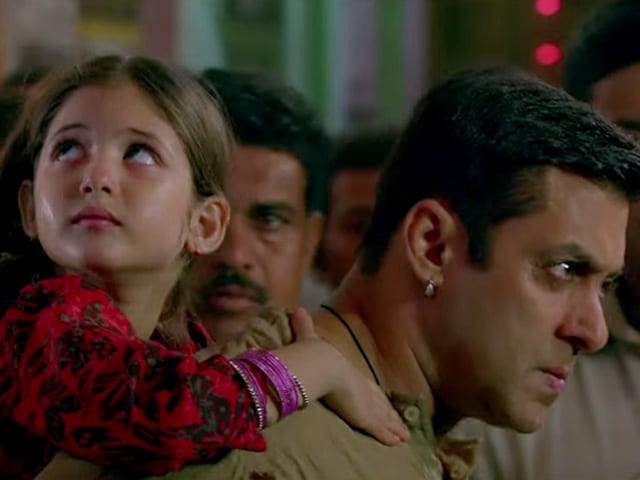
A simpler denunciation of the modern system of nation-states, a cowardly, cruel import in the first place from the God-forsaken (hypocritically “secular”) Western world, is difficult to imagine. Its deep-seated indifference to human well-being and its routine cruelties on all sides are in evidence throughout the movie. Love for one’s country is a wonderful thing, the movie seems to agree with Albert Einstein, but must it stop at the border? And why must love have to stand in queues for passports and visas? Shaahon ke darbar mein kahin ishq jhooka hai, I can hear Geeta Dutt sing behind me. In a memorable scene, poor Bajrangi goes with little Munni to the Pakistan High Commission in Delhi to look for a visa - without a passport in hand! Not only is he summarily dismissed, he is witness to a riot organised by a Hindutva mob trying, in the language they know best, to get back to India a certain ‘Karamjeet Singh’, held by Pakistani authorities. Bajrangi has to defend himself and Munni against them with the help of a bamboo bayonet which has “POLICE” emblazoned on it!

The film does not spare the religionists who are always in search of the political capital that God can help them accumulate and disburse. Salman’s character, Pawan Kumar Chaturvedi, is a bumbling dropout from Pratapgarh (UP) who clears Class X exams at age 30, on the 10th attempt, giving his father a fatal heart attack in the process! He becomes a Hanuman-bhakt after failing at the local sport of public choice, wrestling. Masculine bravado is mocked when it turns out that Pawan gets tickled when he is tackled! No one ever performed a better judo on the RSS - one of whose shakhas is seen fleetingly in one scene. 

Love conquers even ardent vegetarianism when we find Bajrangi Pawan Kumar Chaturvedi arranging a feast of chicken for little Munni when he realizes that she is “Mohammedan” and finds her secretly enjoying a meal in a Muslim household in Jama Masjid.

Pawan’s slogans throughout are “Jai Shri Ram!” and “Jai Bajrang Bali ki!” They could not cut closer to the jaw-bone. His faith is so redoubtable that even in Pakistan he looks for Hanuman-Bhakts!

During the last sequence, shot at the snowed-in border in Kashmir, when the emotional melody Tu jo mila returns as a reprise, I found myself singing along “kyonki tu dhad-kan main dil!” When Munni became Shaheda again and her speech returned as she bid goodbye to her beloved Pawan, I realised I was in a pool of prideful tears, immensely grateful to be born to the part of the world I have been born to! For I can see no such movie even being conceived by Hollywood in which - for instance, the Americans and the Russians could unite as a people, bypassing and rejecting their governments altogether. Unimaginable! For such social and cultural genius, no less for the faith that hundreds of millions carry in their peaceful, and ultimately friendly hearts, our Sub-Continent is utterly unique. Forrest Gump Bajrangi learns to acknowledge and say “Allah haafiz!” in Pakistan, much as some of his Pakistani friends learn to follow and say “Jai Bajrang Bali ki!” 

God is one. His forms are countless many. This is the message. It is this Great truth that will bring our people together again one day.

We have already seen the first real consequence of this landmark film. Geeta is a young “Indian” woman of 22, who is unable to speak. She lost her way to “Pakistan” many years ago. She was found by someone who took her to the famous Edhi Home in Karachi. Despite repeated attempts by people, Indian authorities took no notice of her, let alone help her return home. Now, after Bajrangi Bhaijaan, Foreign Minister Sushma Swaraj asked her ambassador in Islamabad to visit Geeta and help bring her back. Is there another part of the world where popular art has more real consequences?!

Judging from the popular reception of the film in both India and Pakistan (it has broken all box-collection records in both countries), Bajrangi Bhaijaan has achieved at a stroke what a thousand State-level dialogues and a hundred erudite tomes on war and peace in the Sub-Continent could not: It has cleared the room for a new, intelligent imagination of love, faith and faithful coexistence in this turbulent part of the earth. The beauty of Kashmir and Thar are invoked to metaphorize what is at stake in the cowardly shenanigans of leaders, armed forces, warlords and terrorists, or for that matter, in the shouting matches of warmongers on television or the laboured analyses of many intellectuals. While we certainly need good, incisive and accurate analysis, what we need even more is the public imagination to build happy, creative, peaceful narratives of faithful coexistence in the face of machine-guns, armoured vehicles, electric fences, high-security prisons, irresponsible governments and media, intelligence agencies, armed forces and terrorists virtually hell-bent on pre-empting and sabotaging any such collective initiative.

In this enterprise Bajrangi Bhaijaan succeeds beautifully at a popular level. The entertainment from one end of the film to the other is non-stop! Perhaps Salman’s existential predicament - born to a gifted Muslim Bollywood writer (no less than the co-scriptwriter of the game-setting Sholay) and a Marathi mother, making him the very embodiment of an Indian in so many ways! - helped him conceive the idea of a funny film on such a serious theme.

Now Salman has set a higher bar for himself than he, perhaps, ever has. He has a lot to live up to now!


For you, Salman..

Hum ko nahi maloom Salman ki tum doshi ho athva nahi. Ki ghalati tumhaari thhi ya phir kisi aur ki, ki tumne hiran ki hatya ki athva nahi. Insaan hoon, vakeel ya antar-yaami nahi. Nyaya aur kaanoon ki cheezein main nahi samajhta. Lekin itna jaanta hoon ki Khuda ya toh nyaya-poorna ho sakta hai ya phir karunawaan. Uska dono hona asambhav hai. Aur nyaya aur karuna ke beech agar hum se kisi ne bola choon-ne ko, toh is mein koi shaq nahi ki mera rujhaan kis taraf hoga.

Sau khoon maaf karne ke liye toh gantantra ke buzdil leaderaan ya phir sadiyon mein ek baar aane waale Gautam Buddha ya Mahatma Gandhi ki zaroorat padti hai. Anguli-maal sabse sahan nahi ho paata. Lekin ek-do khoon maaf karne laayak toh hum mein se bahut saare hain. Un mein se bahut se log sarkaarein chalaana jaante hain, sarkaaron ka samarthan aur unki sahaayta toh karte hi hain. Aur aaj-kal toh ek mahaan desh-vyaapi-vyaapam chhida hua hai. Toh phir hum tumhaare gunaahon (ya tathaakathit gunaahon) ko kis nazar se dekhein? Agar tum qabool kar lo apni ghalati, to phir tumhe kyon na maafi mile?

Bajrangi Bhaijaan ke baad hamaari taraf se ab sab kuchh maaf hai Salman…magar tumhe ab line pe bane rehna hoga. Samay bahut jatil hai, aur bahut kam bhi. Kahin Shiv Ji ka balance khatam na ho jaaye! Agar tumhaare jaison aur tumhaare mureedon ke jaison ne aadatein nahi badlin, aur samaaj mein bhog, upbhog aur himsa badhti gayin, toh ab catastrophe ‘testostrophe’ ke roop mein aayegi. Climate change raftaar pakdega, aur prithvi se uthega taandav ka vyakul swar: bhoo-kump, baadh, aur samudri toofaanon ke maadhyam se dharti maata hum sab ko - haan, tumhaari pyaari Munni/Shaheda aur Rasika ko bhi - apne lapete mein le legi! Hindustan-Pakistan ka naam-o-nishaan nahi bachega jab Himalaya koyle ki maha-jalan aur tel ki maha-khapat se gal ke hamaare upar haabi ho jaayega…Bajrangi Bhaijaan ke zariye tumne ye dikha diya Salman, ki “Pakistan Zindabaad!” aur “Bharat Mata ki Jai!” jaise naaron ke liye ap prithvi par bilkul bhi wakht nahi. Devi-Devata ab be-chayn ho rahe hain…

Hum sab ko ek swar mein aawaaz deni hai: Jai Bajrang Bali ki!Dharti maata ki Jai! 

Tumhaara gaanaa amar rahe!:

https://www.youtube.com/watch?v=WL8KbSR4Pno